Back to Chapter News
Meet Richard Jester
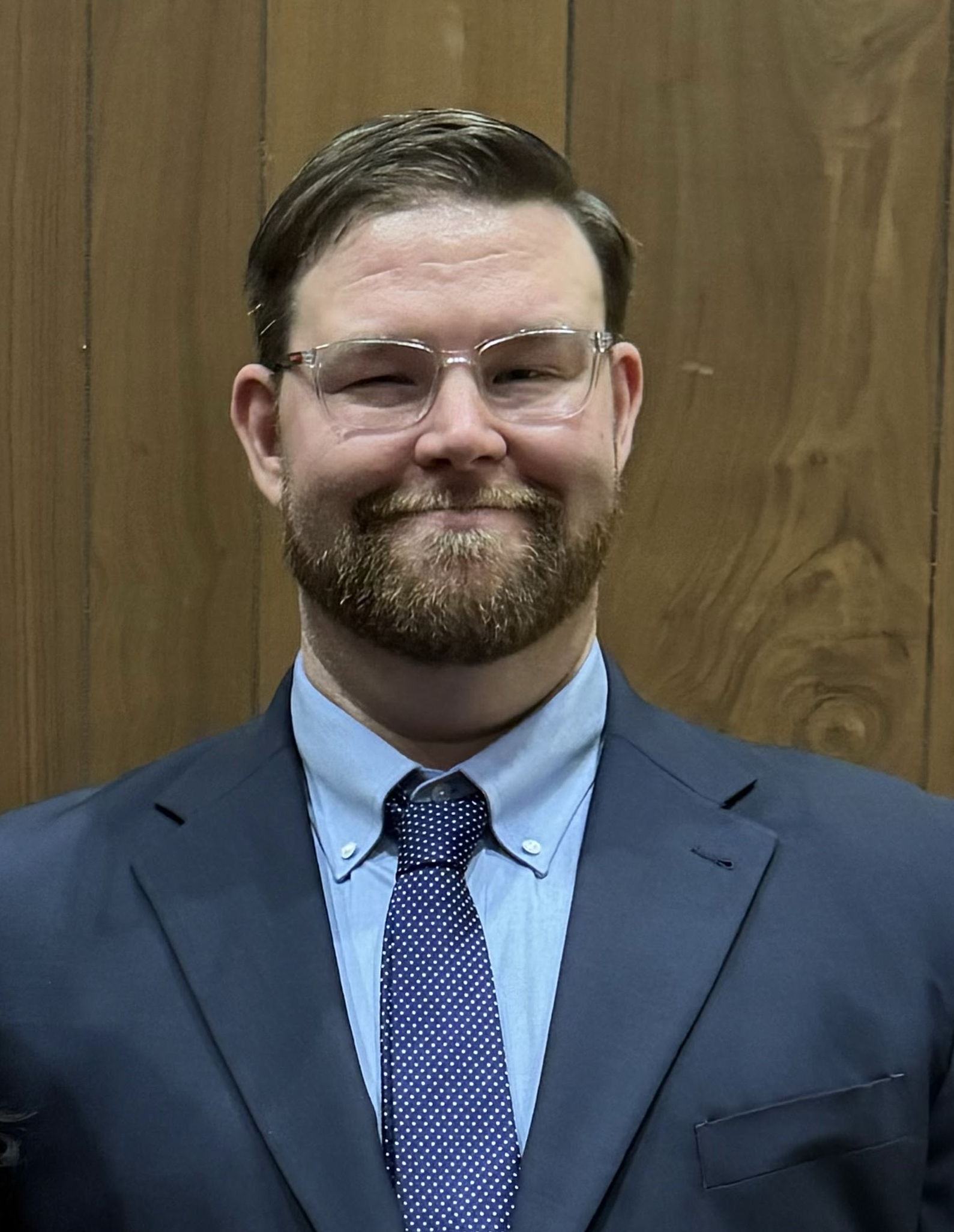
Richard Jester (Vice President, Outside Counsel Engagement, Officer of the General Counsel | JPMorganChase)
BPA Alumni Spotlight: Richard Jester
Richard Jester is a dynamic operations and technology leader at JPMorgan Chase, where he’s actively shaping the future by integrating artificial intelligence and cutting-edge technologies within their legal operations. Leading the Outside Counsel Enablement (OCE) team, he’s the driving force behind the Legal Supplier Central platform, a global solution now used by over 900 law firms and legal vendors to work smarter. Richard is a firm believer that the most powerful and ethical use of AI is in breaking down barriers and empowering everyone with greater access to truth and understanding.
Beyond his impactful work on Wall Street, Richard is deeply invested in inspiring the next generation of leaders and innovators. He serves as Chair of Delaware Business Professionals of America (BPA), an appointed member of the Delaware Advisory Council on Career and Technical Education (DACCTE), and Secretary of the Delaware Artificial Intelligence Commission. In these roles, he champions career development, responsible AI implementation, and the vital principle that technology should be a force for good, unlocking knowledge and empowering individuals with truth.
What are you doing in your career now, and how did you get there?
I teach machines to read the law and build AI agents to assist lawyers and reduce the cost of legal operations. I’m a Vice President and Program Manager for the Outside Counsel Engagement platform under JPMorgan Chase’s Office of the General Counsel, where for 12+ years I’ve watched legal technology evolve from MICR to OCR to ICR to NLP to the large language models of today. I hold a patent (“Systems and Methods Interfacing with Service Providers”), a BA in English from Penn State, an MBA in IT and an MS in Management Science from Goldey-Beacom, and PMP and CSM certifications.
Outside the office, I serve as Secretary of the Delaware Artificial Intelligence Commission, appointed by the Senate President Pro Tempore. I’m a member of the Delaware Advisory Council on Career and Technical Education (DACCTE), appointed by the Governor, where we oversee the disbursement of Perkins V and 509 CTE funding. I also serve on the board of Jobs for Delaware Graduates and as a member of BPA’s National Business Advisory Council, and I run AI workshops for public libraries and community groups.
I grew up in rural Maryland in the 90s. My middle and high school had no BPA. The closest we got were Odyssey of the Mind competitions and science fairs. After Penn State, I earned my MBA and MS, spent six years at Citi (2008–2014) in systems analysis and QA management overseeing Treasury infrastructure, and joined JPMorgan Chase in 2014.
So when I found BPA as an adult, I saw it for what it really is: a talent factory. Every competitive event builds multiple professional skills at once. I spend my days with engineers, lawyers, and people from every discipline, and the lesson never changes. If you can’t communicate your idea, it dies in the room. If you can’t sell what you want to build and why you want to build it, you won’t get funded. If you don’t get funded, you won’t get anywhere in 2026. BPA is the proving ground. It fills the gap between what a typical career pathway teaches and what the business world demands the day you graduate.
What are some of your favorite memories of being a BPA member?
My first BPA memory goes back to 2010, when I volunteered to judge Middle Level Website Design Team.
My first team came from the Cab Calloway School of the Arts in Delaware, a proving ground for performing arts, music, and theater talent. Their website was solid. It checked every box, met every requirement, and it was quick, snappy, and it worked. But the presentation was out of this world. They brought a smoke machine and a choreographed dance routine.
My second team came from Bayard Middle School, a city school. Only one student showed up. He was maybe 12 or 13, dressed in his best suit. He walked up and said, “The rest of my team missed the bus. Give me five extra minutes and I’ll rebuild the site on my laptop and present without them.” He opened his laptop, hit a handful of keys, and spun it around. The site compiled. Then he went straight into his presentation like it was his job.
That’s when I learned what BPA really does. It lets kids succeed no matter their background, their zip code, or their school. It comes down to heart, creativity, and passion. Put all three into your event and your judges will see it. Walk into the worlds of business, science, technology, and policy, and your managers and colleagues will see it too.
What events did you compete in during BPA?
I never competed. I judged, I taught, and eventually I helped lead.
In 2010, I started judging Middle Level Website Design Team. In 2014, I presented my first workshop, “Sherlock Holmes and the Case for Big Data,” on data, taxonomy, and organization, just as the big data revolution was hitting banking and finance. More followed over the years: “The Walking Debt: Survival Skills” (2015), “Building Juggernauts: The Evolution of Comic Books & the Power of Creativity” (2016), “Fake News, Bad News, and Ads, Oh My!” on how science can help separate truth from fiction (2017), and “Weapons of Influence: The Psychology of Persuasion” (2018), along with workshops on careers in regulation technology and on what superheroes can teach us about leadership and team dynamics.
In 2017, I joined the Delaware BPA board. In 2018, I was first elected chairman, a role I’ve held on and off for about nine years. In 2025, I became a founding member of BPA’s National Business Advisory Council and attended my first National Leadership Conference in Orlando. In 2026, I returned to judge 3D Computer Modeling at the National Leadership Conference in Nashville.
What were some valuable skills you gained through BPA, and how have they helped you in your career?
BPA taught me to teach. Every year, I build a new workshop, from big data to the psychology of persuasion, and every year the challenge is the same: make a complicated idea useful to a middle schooler. That skill follows me into every room I work in with engineers, lawyers, and executives.
It keeps me sharp, too. Every national conference, I come home with a list of ten new tools, software, techniques, or books I never would have found without these students. They teach me as much as I teach them.
I share my stories and the mistakes I’ve made in corporate America so students can avoid them or, better, turn their own mistakes into learning from failure.
I’m fortunate to work for a company that supports BPA and sends me to these conferences every year. I hope more companies see BPA for what it is: an investment in your next generation of employees. These students can build a marketing presentation, do economic research, produce a video, run your social media, and create content. They’re AI native. Gen Z gets a lot of criticism. Aim their creativity at something and watch what develops. I have yet to not be impressed.
What was your proudest accomplishment during BPA?
My proudest BPA accomplishment is building BPA 3D at JPMorgan Chase.
It started in 2018 as a pizza party for students who couldn’t afford to travel to Nationals. Today, it’s funded by JPMorgan Chase’s Office of the General Counsel, and every year we invite every student who places first, second, or third at the Delaware state conference to spend a day with us. It has grown into separate Middle Level and High School programs.
The day has two halves. First, a mini tech conference: opening remarks, good food from local businesses, a workshop, and a one-hour Q&A with JPMorgan Chase executive directors and managing directors. Over 13 directors joined us across two days last year. Then, Shark Tank. Instead of two judges, students present to four to eight, some in the room and some virtual, because in the real world, the person evaluating your idea isn’t always in the room.
Of the [187] students who attended, [67%] finished top [10] in their events at Nationals in Nashville.
It works both ways. JPMorgan employees from Chicago, Delaware, Ohio, New Jersey and New York come to see the talent coming up behind them, and they carry what they see back to their teams. That insight shapes how and where we hire. It’s the best day you’ll have at work all year.
I’m fortunate to work for a company that keeps investing in the next generation. I hope more companies follow.
What is one piece of career advice you wish you had known as a BPA member?
Be curious. Be prepared. Follow through.
In 2010, I volunteered to judge a middle school website design team. That one decision led to my first workshop, a seat on the Delaware BPA board, a chairmanship, and a founding seat on the National Business Advisory Council. None of it was on a plan. It started with a raised hand.
Careers aren’t built in one giant leap. They’re built one small step at a time: volunteering, asking questions, preparing, and following through. Find mentors you trust. Learn from your mistakes and turn them into your next opportunity. And keep moving. Life is locomotion, and you’ll find your way.
Who had the biggest impact on your BPA journey, and why?
The biggest impact on my BPA journey has been the students.
I’ve watched students who came to my workshops as curious seventh graders grow into astonishing engineers, world-class economists, and lawyers. As someone without children, the relationships I’ve built with my mentees mean the world to me and my wife. They let us share our experiences and be part of the lives of some amazing young people.
Our students are the best advertisement for BPA. Put a group of students with two or more years in BPA in front of executives or professionals, give them a goal and prep time, and they’ll impress everyone in the room.
Entry-level jobs are drying up. That’s why career and technical student organizations like BPA matter more than ever: they build well-rounded, T-shaped professionals. AI changes the game. The question is no longer whether you can do something. It’s whether you have the tenacity, the stick-to-itiveness, and the follow-through to finish it. BPA is where you figure out what you want to do and what you don’t.
I never imagined I’d be recommending county and state governments leverage drone technology to create digital twins of properties to future property tax reassessments. That idea came from a BPA conference. I’ve shared it with local officials, state elected officials, members of Congress, and the Governor, and they listen. If you want to show people in power what’s possible, put a BPA student in front of them.
Inspirational Quote
“Be curious. Be prepared. Follow through. Raise your hand, find your mentors, and keep moving. Your next opportunity is one small step away.”
“You can’t always predict every wave that comes your way, but you can ALWAYS learn to sail.”